
International Citizen Service - Tanzania 2019:
- Thomas Partridge

- Feb 2, 2020
- 12 min read
Updated: Feb 4, 2020
After returning from placement for a couple of months now, I have allowed time to reflect on my two months spent volunteering in Tanzania. Hopefully, this post will endeavour to describe my journey through thick and thin, remaining critical to the outcomes of the project and possibly guiding others to deciding whether they may or may not be suited for the task.
Before proceeding, I'd just like to thank everyone who had so generously donated or had spread word of my activities especially even whilst I was fundraising for the Amazon 2020. Without you, this would have never been a possibility and I wouldn't have contributed to the education of many prospective entrepreneurs, some of which I receive regular updates from regarding their business adventures.
The journey before placement:
The experience before placement was overall very satisfactory. After expressing interest in the program, I was invited to join an assessment day in London, with travel costs reimbursed and helpful recommendations to plant me on two feet. I personally would recommend staying at the Astor Victoria, a hostel nearby Raleigh's headquarters which is comparably very cheap for London (just under £20), hosts a nice atmosphere with different events during the evenings and free breakfast included. The interview itself concluded of a calm conversation to discover your interests, reviewing your reasons for participating and allowing for you to express where you wish to visit. The whole project from start to finish had made it easy to settle into new friendships and even from the interview stage I had met like-minded individuals who I had later reconvened with during the Training weekend. The most important mention of the training day was the clarification that this was not a holiday! As I will go onto address later, I had asked to visit Nepal initially but instead was partnered with Tanzania and probably for the best. For this was not some sort of cheap loophole framed around volunteer tourism. The grafting was tough, day in day out and safety was of course the main priority which compromised your ability to hike elsewhere or move around. That sort of proposal can be offered by VSO or Restless Development yet there are some advantages of choosing Raleigh over the latter.
The training weekend hosted in an activity centre just outside of Doncaster, a couple months later was definitely worth attending. After splitting off into small teams, a couple of speakers / mentors geared us towards the mindset that should be adopted before departing to Tanzania. This revolved around intense debates, covering topics such as globalisation, poverty and issues of the white saviour complex. I suppose it was my first informal lecture on international development or any form of cultural studies and had actually allowed me to gain perspective once in-country. It's very rare that you have these opportunities for deep discussion and so everyone in my group immediately became enthused. The most prominent lessons I took away from those sessions were that imposing western ideals of how we should go about tackling problems isn't always the best idea. Just because it's worked for us in the past doesn't mean it's the right or best way to execute aid. America seems to have a habit of assuming this and it's only conditioned a dependence for the developing to receive from the developed nations.
The weekend also allowed me to meet many new acquaintences and was overall a ton of fun. From setting up a DIY rave, dancing to the candy dance way past the hour to acting as a group of humans that were interviewed but could only say yes if you had made eye contact, it was intense, educational and very entertaining!


In-country:
To summarise two months perfectly into a couple of paragraphs remains somewhat of an impossible task but hopefully, this will paint an accurate picture of what life could be like for those going on placement. Every team has a completely unique experience, from the individual team members (including in-country and UK volunteers), to the fabric of the village community, country and location. It just sometimes requires that you to take a bit of a risk and more importantly positivity; though on further note support was given if you completely rejected your circumstances.
Once arrived at Heathrow, we all congregated together at the same terminal and Raleigh had managed to make the transportation as fluid as possible. We sipped our last drinks before drying up for two months and flew towards for Dar es Salaam Airport. I'm going to skip the period between in-country training and arriving in village though arguably this had been one of the highlights of my trip; helping the big chef cook meals, take on the role of a mosquito in an attempt to display why we should wear insect repellent (DEET) which also gave rise to the nickname 'dancing mosquito' even though it shortly changed to Malaria boy after I had contracted the parasite back in the UK. It was definitely enough time to make you feel at ease, get comfortable with your placement friends and crack out some laughs whilst also learning the appropriate skills required. This was all held within the confines of a Christian nunnery, allowing somewhat of a bubble to exist between Tanzania and back home. I was sorted into a collective known as Echo 4 which had consisted of 5 UK Vols and 6 Tanzanians + a UK / Tz team leader who had all received the mission of delivering a livelihoods project. This essentially entailed teaching entrepreneurial skills to the village community so that their village can become more practically functional and allow small yet necessary bursts of local economic growth.


Village Life:
My first day having arrived in the village of Mlaguzi (a 1hr drive from the small town of Turiani) was the most welcoming introduction of my life, though this also transpired for me to feel slightly uncomfortable. After the logistics guys dropped us off with our beds, mats and bags, it was time to start settling in! Our project focus was to ensure that villages existing around the Mkingu forest preserve had means of supporting themselves through business and commerce that deviated from illegal deforestation from further within. Though accounts of these activities were still visible and ongoing as the pursuit for better living or at least an income remains challenging for many Tanzanians.
Walking through the village for the first time can seem quite daunting. The locals had somewhat acknowledged me as a respectable figure or prime minister rushing to make their acquaintances known though others were slightly scared. Fortunately, after a couple of weeks, this view had subsided though for some I had been the first white male they had ever layed eyes upon (either that or my freakishly curly blonde hair). Every day, I would be swept into a constant dialogue between greeting villagers as it became apparent that they would go out of their way acknowledge each other. Tanzania is a country that loves conversation and making active avoidance is a big taboo among your local community (though all to my pleasure).
My Tanzanian Family:





Luckily for me, I had become engrossed with the beauty of the Mlaguzi village, with its vast assortment of banana trees, palm trees, cocoa crops and jack fruit some of which is exported to other countries. It's boundless in natural assets. After marching up a steep muddy track, the mountains lured me ever closer to my final destination that was to become my newly fostered second home. The house I had stayed in was relatively plush compared with that of its neighbours, demonstrating Raleigh's proficiency at finding suitable locations with hospitable company. In this case, my host Dad was a shop keeper called Jonny Julian Thomas. Though I soon learned that the shack next door was his restaurant and bar. I mean, what more could a teenager desire to succumb their growing needs! Shops sold goods ranging from shoes to bags of rice and all at a fair price if Mzungu (or white man tax) was discounted. By UK standards this was nothing but a four walled brick building with a shack outside for shade, but it had almost every functionality a village could require. Customers would come to buy their ingredients (usually beans or rice) for cooking, or meat butchered by my host brother David. Though it was also a hub in the evenings to eat a communal meal, play card games and make time to socialise. Interestingly although the region is fairly poor, people had acquired solar panels by which a relatively stable energy supply could be drawn from, a more sustainable alternative to the prolific deforestation that occurs from further within.


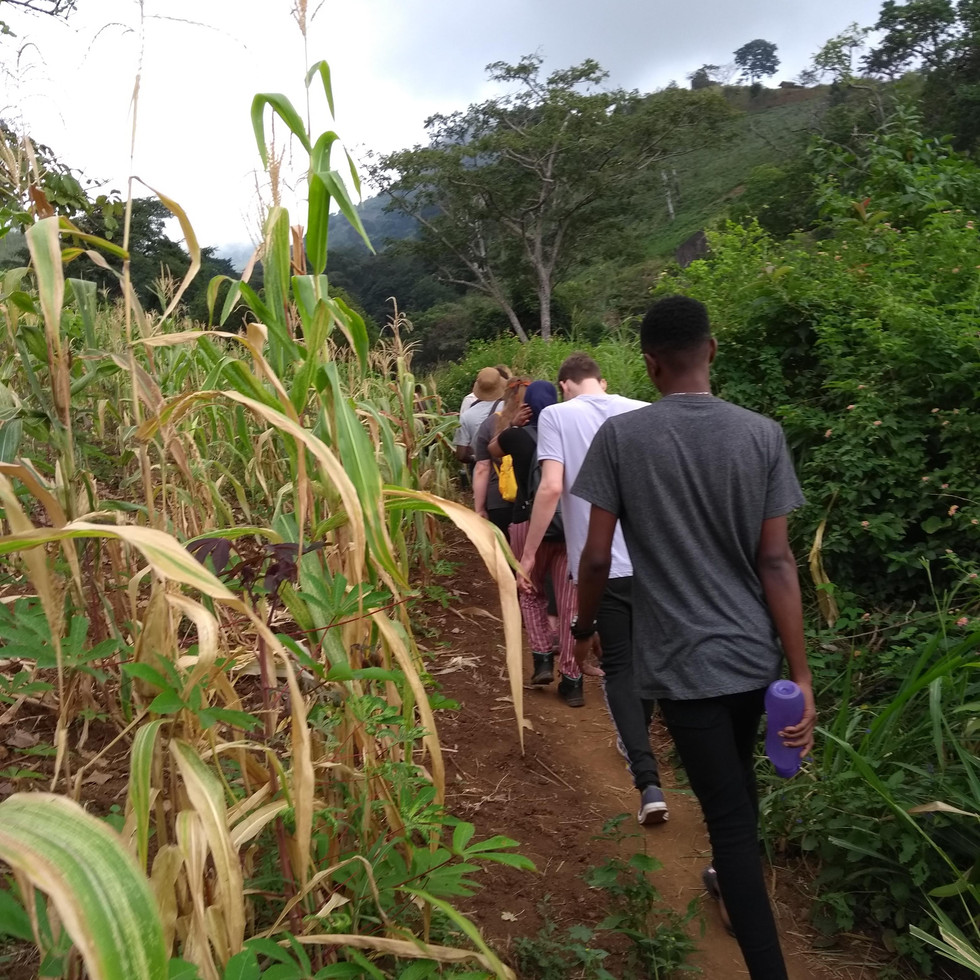





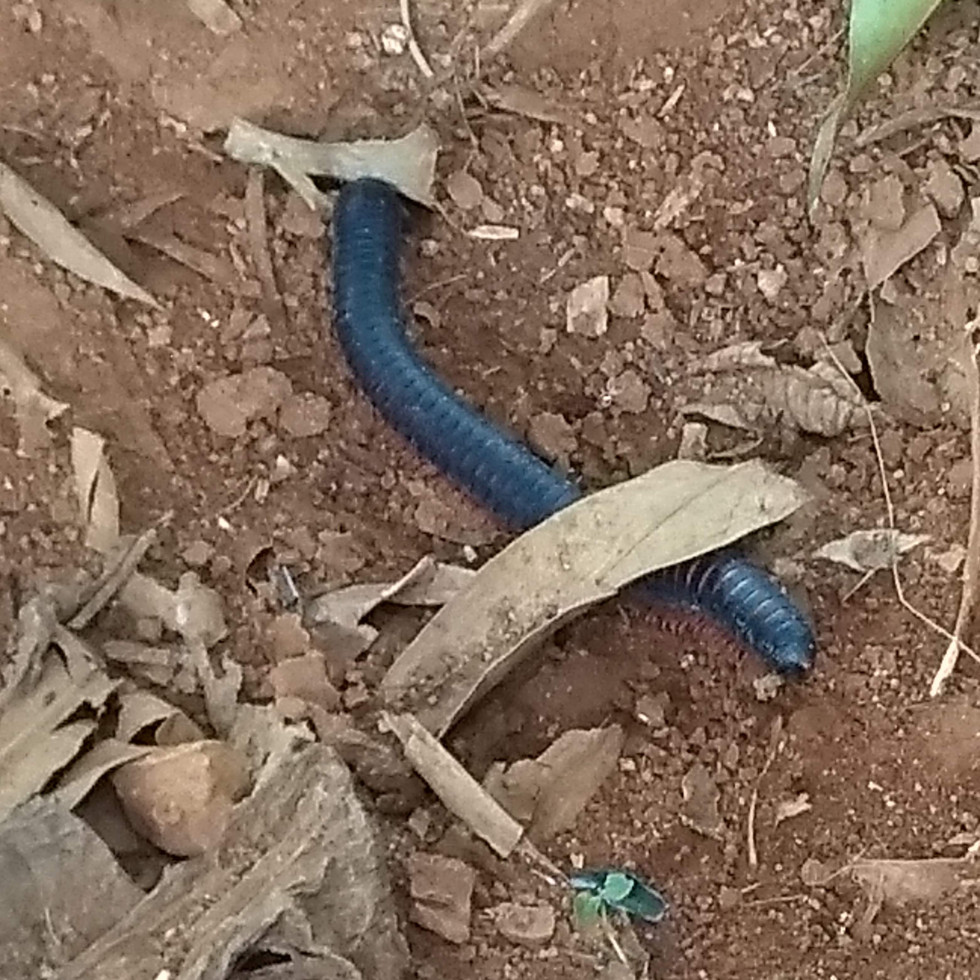


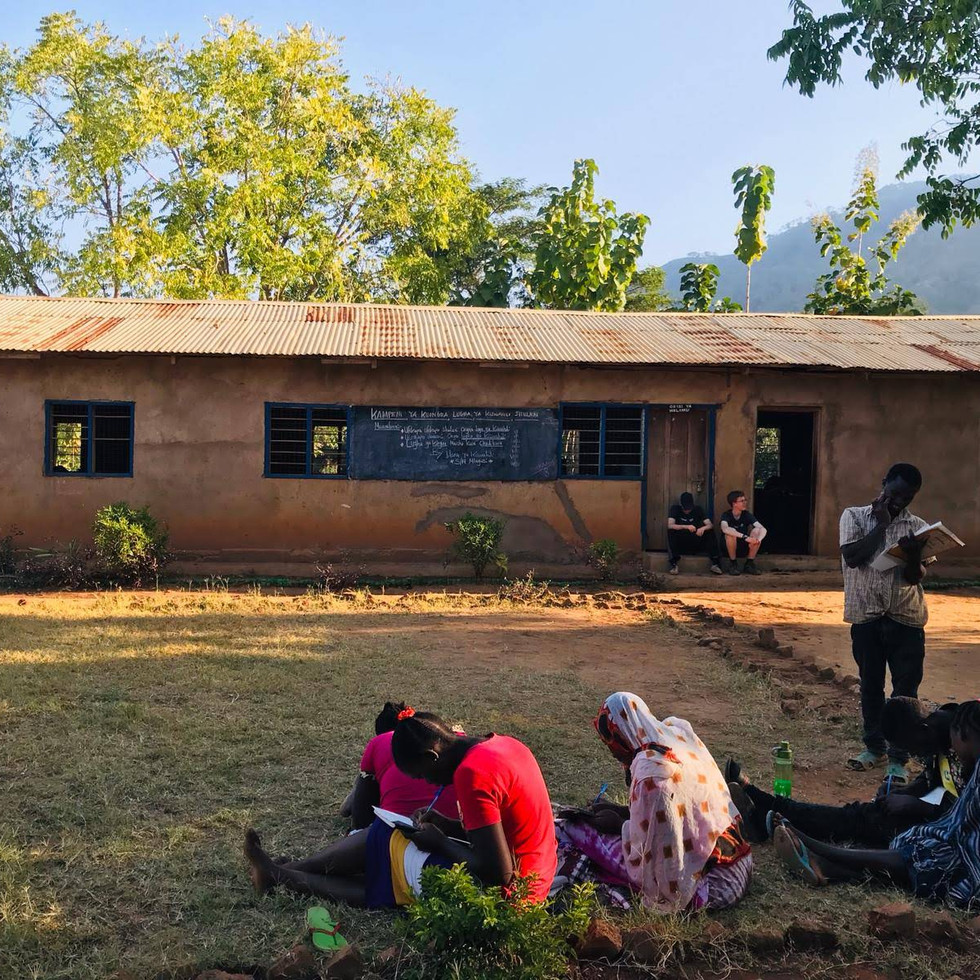


My room consisted no more than a door, mud floor, brick wall and tin roof, though I soon discovered this was all the luxuries I had really ever needed. A squat toilet and shower had recently been built outside, demonstrating impressive views over the sugar cane fields set afire at night. Security here wasn't really an issue as padlocks had been provided as well as my own though Jonny made sure that our goods were looked after. During my time spent in Mlaguzi, locals had guided us to nearby waterfalls, mountain vistas and newly built facilities. To my surprise after crossing a nearby river, my friend Jack and I had discovered a whole water processing unit, stranded in the middle of nowhere! A man looking after it told us this was funded by the UN delivering safer water to the town in the valley.
People spent their time here, making conversation around their piki piki's (or motorbikes though I would draw a distinction as these bikes would be fitted with loudspeakers to vibrate afro-pop down the valley) or by playing pool, watching football at one of the two cinemas (all very simple constructions) and or by bathing in the river. I had found it incredibly comforting to witness a community that enjoyed it's own presence, with people making time for one another, organising large village party's and sharing communal meals. Most impressively was that of the kid's inventiveness to spend days whittling from wood out of discarded pieces they had found to eventually construct a bike that was capable of descending steep hills. One of my favourite places to visit was by the tailours a couple of yards from my house, whereby I would watch her make tailored garments out of large pieces of cloth invigorated with colour and expression.
Project Work:
We'd normally rise early, eat breakfast as a group just after 8 am (regularly serving Chapati which is a sort of savoury pancake, though thoroughly delicious) before heading down to a former headmasters office nearby the school which had been transformed into our forward base of operations. At the star,t we had had to raise awareness of our entrepreneurial campaign and so carried out local surveys and marketing. This was readily received after planning a village gathering whereby we had set up fun games for the school children, teens and elders to participate in such as creating our own chapati relay race or traditional games such as letting a chicken loose for the elders to scramble over whilst the rest of the village formed a huge ring around the players. The teens demonstrated their athletic ability by backflipping from one side of the football pitch to the other without a hint of fatigue. Lastly, we had arranged that a huge speaker system was brought up on several motorbikes (a challenge in itself) which the villagers spent all evening dancing too. With this, we noticed that music & dance is something Tanzanians all adore to the point where we couldn't keep up with their perpetual partying.
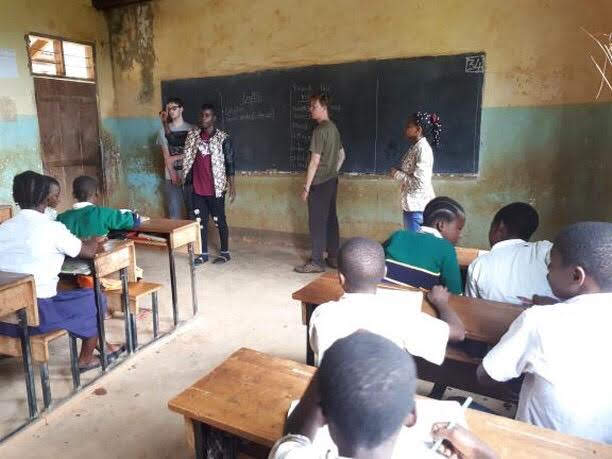
After making ourselves known, the group focused on planning teaching sessions to entrepreneurs at the local primary school. For this, we'd used a resource book and came up with visual and local examples to put into practice. Progress was often slow and tedious but with time this eventually paid off. Because of the limited education most individuals had received, they would often be intimidated by maths or freakish business terms. It was our job to provide them with an ounce of confidence, making it engaging through games and get them thinking about their own business propositions. The hard struggle was settling the balance of responsibilities between the UK and Tanzanian volunteers. Sometimes, language can prove a frustrating barrier. Whilst most Tanzanian volunteers spoke fairly good English, we often would experience clashes of confusion and in some respects this would cause the Tz's to rely on their own knowledge, deviating off the lesson plan that had been provided because it was easier for themselves to understand. Another issue is that specific terms in English are very hard to translate into Swahili due to the difference of complexity between both languages. This had sometimes resulted in the UK volunteers feeling occasionally obsolete as their own knowledge was dismissed which was of some significance to the entrepreneurs being able to make a successful business plan, conduct market research and calculate cash flow. Though during our debriefs at the end of the day, we usually managed to flag this as an issue and would reschedule a time to revise certain topics. I take my hat off to the Tanzanian volunteers who would receive the brunt of the workload, whether that be translating our posters, presentations, or negotiating with highly respected elders and managing class conflicts.
At the end of our placement, 50 entrepreneurs had pitched their business plan to our staff team which gave us the difficult task of selecting 15 entrepreneurs to enter the final pitch! The pitching day came - which felt more dramatic than any scene of the apprentice as Echo 4's efforts would soon take shape. These aspiring entrepreneurs had shown real enthusiasm and were desperate to make their hard work known to the project managers who could support only up 10 businesses. Fortunately for us, 9 of these businesses had been awarded a combined pool of 3.6 Million TZS to kickstart their business careers. A particular favourite of mine were two determined 19-year-olds - Anodi and France. Anodi had made plans to start a chicken business so that he could sell eggs and France had intended to sell modern clothes to the local community. I was lucky enough to join them on their journey to Morogoro to buy materials from the grant money provided and watch their businesses setup. One entrepreneur named Pascal (our A* student) had been turned down due to a lack of certification for his solar panel business, however he thanked us dearly and showed his attempts to enrol on a course whilst also applying for a government loan.
Overall the success of the project had rippled right through the village. Nearing the end of the project, shops popped up that had never previously existed alongside a general change in attitude that instead of mirroring another businesses success, individuals should seek new needs in the community that had not already been met (creating unique selling points). Government loans groups had formed for those who did not receive the grant, groups who were initially scared to apply before had now been given the education to press forward. Unlike in the United Kingdom, small investments such as these really do spread a long way and businesses can become busy within a matter of months. By the end, 60 graduates celebrated with their 90% attendance for over 2 months of daily commitment


So what advice would I give someone if they intended to try something similar?
Firstly - this is not a holiday, usually 9-5 days with minimal travel almost 6 days a week. UK aid doesn't pay for your safari expenses if that's what you had in mind. The project is what you make of it, instead of paying for an experience we'd invent our own such as cooking maize on a bonfire, playing football with the local teams or swimming under waterfalls with the locals and hosting come dine with me Mlaguzi!
Secondly - The livelihood project required a lot of patience (more so than a wash or construction project), it's only till the end that you fully respected your achievements, though planning 'action days' for the community mid-way through also provided a mild sense of success.
Thirdly - If you enjoy cultural integration, requiring you to fully embrace whatever's going on around you then this placement can be really beneficial. By the end, I was dancing to Singeri, wielding a large machete, talking to my elders in Swahili and cooking many African dishes such as ugali and chips mayai. This requires you to feel totally uncomfortable at first but eventually leeds to so many new opportunities. Remarkably there was a strong 4g connection (probably due to being at fairly high altitude) should you require contacting home, which saved my life when battling through UCAS. Also, If your into Philipines romantic comedy's - Tanzania has it all :).
Lastly, if you enjoy teaching or have set up a small enterprise in the past then this project could be the right one for you. However, it doesn't require any previous business knowledge just the enthusiasm to learn. A WASH project requires a bit less communication between Tz and UK volunteers, proving less frustrating as the work is shared fairly equally during construction projects. Therefore if your more hands-on and might find it tricky to overcome the language barrier then that could be the better option. Somedays the Tz volunteers would want a break from English or not understand some obscure British sarcastic joke but this was all understandable.
This was truly an incredible journey for me, one that I'm not likely to forget. It's the people that I will sadly miss the most as it goes to show how content one could be without most modern luxuries, treating me as one of their own and fostering my negligible dancing skills with smiles all round. The hardest thing to get over was their sense of 'bongo time', you might arrange for a focus group to meet at 12 and instead they arrive at 4 pm but once accepted you'll soon appreciate the other means of passing the time...
Asante Sana Mlaguzi - I'll leave you with these pics!




# ICS Volunteering
#Volunteering Tanzania
#Livelihoods project
#Kickass summers


Comments